
How Long Do Dental Crowns and Bridges Last? Tips for Maximizing Their Lifespan
Dental crowns and bridges are both common types of restorations that can repair or replace damaged teeth. While these restorations are designed to be durable and long-lasting, they do not last forever. However, it is possible to increase the lifespan of your crown or bridge by following a consistent at-home oral hygiene routine, avoiding certain foods that can cause damage, and visiting your dentist every six months for regular cleanings and checkups.
What Are Dental Crowns and Bridges?
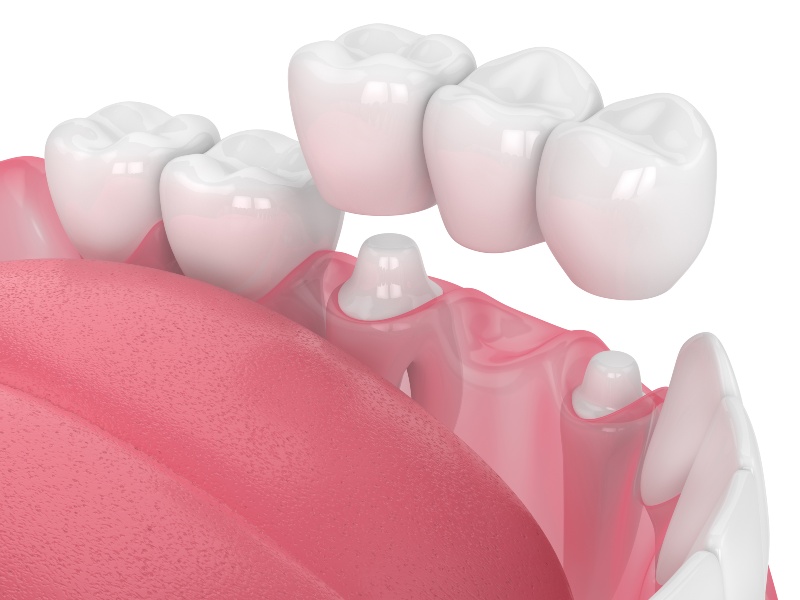
A dental crown is a cap that fits over a damaged or weakened tooth to restore its natural shape, strength, and appearance. To support a crown, the tooth is reshaped and filed down so there is enough room for the crown to fit entirely over the surface, all the way down to the gumline. Most crowns are made from porcelain, ceramic, or zirconia, which are all able to match the natural color of the teeth and stand up to everyday wear and tear.
Dental bridges are dental appliances that replace one or more missing teeth by filling the gap with an artificial tooth called a pontic. Bridges are anchored in place with crowns on one or both sides, which attach to your natural teeth or dental implants. Bridges are cemented in place and cannot be removed, so they look and function just like your natural teeth.
How Long Do Dental Crowns Last?
The average lifespan of a dental crown is about 10 to 15 years. However, a dental crown can last much longer with the right care and maintenance. Alternatively, it may fail much sooner if it is not well cared for or if you sustain an injury that damages the restoration. The longevity of your dental crown is affected by your overall oral health, the location of the crown in your mouth, and your daily routine. Crowns that are on the back teeth tend to experience greater wear and tear than those in the front of the mouth due to more constant pressure from chewing forces.
How Long Do Dental Bridges Last?
Bridges have a shorter average lifespan than dental crowns, about five to 15 years. Like crowns, dental bridge longevity is affected by several factors, including the location of the bridge, the type of material used, and the accuracy of the bridge placement. Additionally, bridges are more difficult to clean and maintain because you must floss underneath the bridge where it is not attached to the natural teeth. Without the right care and maintenance, tooth decay and gum disease can form, which will weaken the underlying structures supporting the appliance.
Tips for Maximizing the Lifespan of Crowns and Bridges
Some factors affecting the lifespan of your dental crown or bridge are out of your control. However, there are still many steps you can take to keep your dental restoration in good shape. Here are the tips we give our patients here at Modern Touch Dental:
- Brush Twice Daily – Just like the natural teeth, crowns and bridges need to be brushed twice daily using a soft-bristled toothbrush and non-abrasive fluoride toothpaste. After brushing, avoid using any mouthwash that contains alcohol, as this can weaken the dental cement that holds the crown or bridge in place.
- Floss Once Daily – Flossing is essential for protecting your crown or bridge because it cleans between the teeth and along the gumline, helping protect the foundation that supports your dental restoration. If you have a bridge, you may need to use floss threaders, interproximal brushes, or a water flosser to get beneath the bridge and remove trapped food particles and plaque.
- Avoid Hard or Sticky Foods – Chewing on hard candy, ice, popcorn kernels, or sticky foods like caramel can dislodge a dental restoration, so avoiding these types of foods is recommended.
- Wear a Mouthguard During High-Impact Activities and Contact Sports – If you play contact sports or participate in other high-impact physical activities, a custom-fitted mouthguard is recommended. A mouthguard can shield your crowns, bridges, and natural teeth from impacts, saving you from costly emergency dental care.
- Wear a Nightguard During Sleep – If you grind or clench your teeth while you sleep, you should ask your dentist about a nightguard. A nightguard will protect your teeth from the excess bite force of clenching or grinding the teeth, which can otherwise damage crowns or bridges and lead to premature replacement.
- Do Not Use Tobacco – Tobacco is not only bad for your health, but it can increase the risk that your crown or bridge will fail prematurely. Smoking, chewing, or vaping tobacco increases your risk of gum disease, bone loss, and infections. If you use tobacco, having a crown or bridge is just another reason to kick the habit.
- Visit the Dentist for Routine Checkups – Oral health issues develop gradually, and they are most treatable in their earliest stages. If gingivitis or tooth decay is threatening your crown or bridge, your dentist may be able to reverse the damage before your restoration is compromised. Schedule cleanings and checkups once every six months.
Signs Your Crown or Bridge May Need Replacement
If you notice any of the following signs, it’s time to schedule a visit to the dentist’s office, as your crown or bridge may need replacement.
- Loose or shifting fit of the restoration
- Visible damage like cracks, chips, or rough edges
- New difficulty chewing or speaking
- Changes to your bite (Your teeth no longer fit together the same way.)
- Sensitivity when eating or drinking
- Pain or pressure around the area of the crown or bridge
- Bad breath or a foul taste in the mouth
- Changes to the gums, including redness, irritation, or bleeding
Care for Your Dental Restorations at Modern Touch Dental
Don’t delay care when you notice the signs that your crown or bridge is no longer functioning how it should be. Contact us to replace a crown or bridge in Hartland, WI or get preventive care for maintaining dental bridges and crowns.