
Clear Aligners vs. Braces: Which Orthodontic Treatment Is Best?
A straighter smile can give you another reason to feel confident, but getting there starts with choosing the right treatment. Clear aligners and traditional braces can both move teeth into better positions, but the experience of wearing them can be quite different. Clear aligners use removable trays, while braces rely on fixed brackets and wires. If you’re asking, “Which is better, clear aligners or braces?” there isn’t a one-size-fits-all answer. The right treatment depends on what needs to be corrected and how well each option fits into your everyday routine. Understanding the differences of clear aligners vs. braces can help you feel more confident discussing your choices with your dental team.
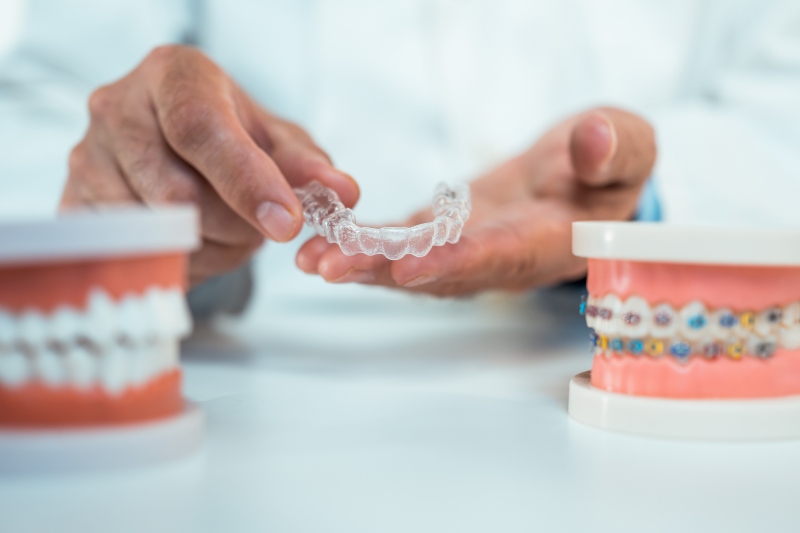
What Are Clear Aligners?
Clear aligners are transparent, removable trays designed to guide teeth into new positions gradually. Treatment involves progressing through a series of trays that apply controlled pressure to move your teeth over time. One of their biggest advantages is their subtle appearance. Because the trays fit closely over the teeth, they are much less noticeable than traditional brackets and wires. They can also be removed for eating and everyday oral hygiene. That convenience comes with some responsibility. Clear aligners only work as intended when they’re worn consistently according to the treatment plan.
What Are Braces?
Traditional braces use brackets attached directly to the teeth with wires running between them. Unlike clear aligners, braces stay fixed in place throughout treatment. The system applies pressure that gradually guides teeth toward their planned positions. Braces can treat a wide range of alignment problems and may offer advantages when more complicated tooth movements are required. Because they’re fixed, they also don’t require the patient to remember to wear an appliance each day.
Key Differences Between Clear Aligners and Braces
When comparing clear aligners vs. traditional braces, appearance is only part of the decision. It’s also important to consider how each treatment may affect your routine.
- Appearance and Discretion: If you want your orthodontic treatment to attract as little attention as possible, clear aligners have a clear advantage. Their transparent design makes them less noticeable than traditional metal braces. Braces use visible brackets and wires, although alternatives such as ceramic brackets can provide a less noticeable appearance.
- Treatment Effectiveness: Both clear aligners and braces can straighten teeth successfully, but they aren’t equally suited to every case. Clear aligners can address many mild-to-moderate alignment concerns as well as some bite problems. Braces may provide greater control for severe crowding or more complicated bite correction. The best results come from choosing a treatment based on what your smile actually needs, rather than on appearance alone.
- Treatment Time: Are traditional braces faster than clear aligners? Not automatically. Treatment length varies depending on the complexity of the case. With removable aligners, staying consistent with the recommended wear schedule also influences treatment progress. This means it’s better to get an individualized treatment estimate instead of choosing an option simply because you expect it to be faster.
- Comfort and Convenience: Clear aligners don’t have traditional brackets and wires, and their smooth trays may cause less irritation to the cheeks and gums. They can also be removed when necessary. Traditional braces can sometimes cause soft-tissue irritation from their fixed hardware. Some pressure or temporary discomfort can occur with either option as the teeth move.
- Oral Hygiene and Maintenance: Clear aligners can make your normal oral hygiene routine more straightforward. You remove the trays to brush and floss, then clean the aligners separately. With braces, cleaning requires more attention around the brackets and wires, where plaque and food can collect.
- Food and Lifestyle Considerations: Because clear aligners are removed before eating, you don’t have the same food restrictions associated with fixed braces. Braces may require avoiding hard or sticky foods that could damage their brackets and wires. On the other hand, you never have to remember to put braces back in after a meal. Clear aligners require more day-to-day responsibility because they must be worn consistently to keep your progress on track.
Clear Aligners vs. Traditional Braces: Pros and Cons
Looking at the pros and cons of clear aligners vs. traditional braces can make the decision a little easier. Clear aligners offer benefits such as:
- A less noticeable appearance
- Removable trays
- Fewer food restrictions
- Easier access for brushing and flossing
- No traditional metal brackets or wires
How to Choose Between Clear Aligners and Braces
Choosing between the two begins with your teeth, not the appliance. Your dentist needs to consider the type and complexity of your alignment concerns to determine which treatments are appropriate. Your lifestyle matters, too. Ask yourself whether you’re prepared to keep up with a removable appliance throughout the day. If maintaining your usual eating habits is important to you, clear aligners may feel more convenient. If you’d rather not have to think about removing and replacing an appliance, fixed braces may be worth considering. A professional evaluation brings those factors together. You’ll be able to discuss your smile goals, oral health, and expected treatment so you can make an informed choice rather than simply choosing the option that looks most appealing.
Explore Clear Aligners at Modern Touch Dental
If you’re ready to feel more confident about your smile, Modern Touch Dental offers clear aligners as part of its cosmetic dental services in Hartland, WI. The practice emphasizes high-quality modern dentistry while prioritizing patient comfort, convenience, and confidence. Contact Modern Touch Dental to schedule an appointment and find out whether clear aligners could be the right fit for your smile.
Frequently Asked Questions About Clear Aligners and Braces
Deciding how to straighten your teeth can raise questions about everything from treatment duration to everyday convenience. Understanding a few of the practical differences between clear aligners and traditional braces can help you know what to discuss with your dentist before getting started.
How do treatment times compare between clear aligners and braces?
Treatment time depends on the type and complexity of the orthodontic problem. Clear aligner progress also depends on consistently following the prescribed wear schedule. Because individual treatment needs vary, braces shouldn’t automatically be assumed to be faster than clear aligners.
Which is more suitable for adults, clear aligners or braces?
Both treatments may be suitable for adults. Clear aligners can be especially appealing to adults who want a less noticeable option that can be removed for meals and oral hygiene. Braces may be better suited to certain complex alignment problems.
Are there differences in effectiveness for treating overbites between clear aligners and braces?
Yes. Clear aligners can treat some overbites, while braces may be more appropriate when the bite problem is more complex. A professional evaluation is necessary to determine which approach can effectively address a particular overbite.
Can I eat normally with clear aligners?
Clear aligners are removed before eating, so patients don’t have the same food restrictions associated with fixed braces. Braces may require avoiding hard or sticky foods that could damage their hardware.
Are clear aligners easier to keep clean than traditional braces?
Clear aligners can simplify brushing and flossing because the trays are removable. The aligners also need to be cleaned regularly. Braces stay attached to the teeth, so additional attention is needed when cleaning around brackets and wires.